
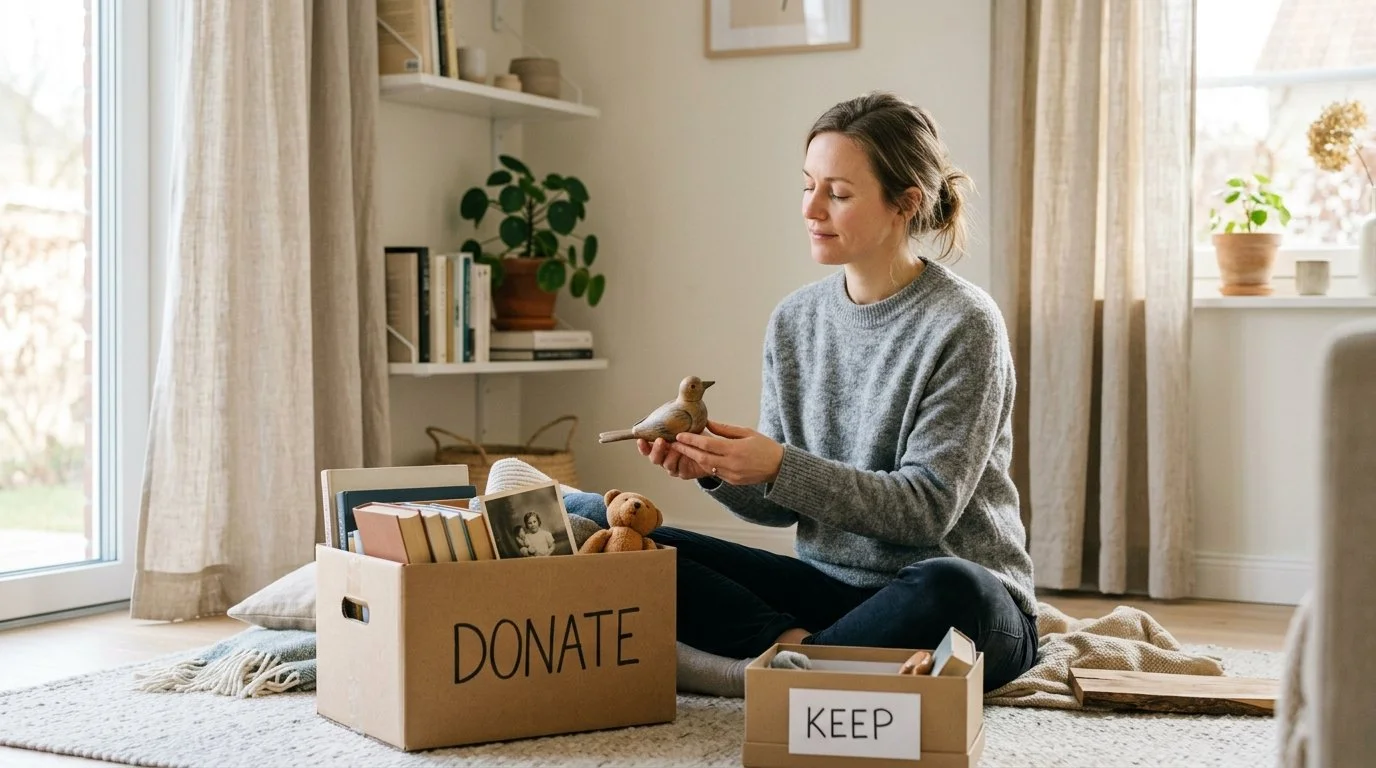
A calm home does not come from perfect bins or a showhouse look. It comes from small systems that make daily life feel less noisy and less rushed. If you want to make a home feel calm, start by noticing where the friction lives.
Make A Home Feel Calm
The fastest way to make a home feel calm is to reduce the number of little decisions your brain has to make. That means giving everyday items a home, keeping surfaces from collecting random clutter, and making the most-used spaces easier to reset. When the entryway works, the morning feels lighter. When the kitchen works, the whole day gets a better start.
We see this all the time in client homes. A calm feeling often shows up after a few simple changes, not after a giant overhaul. A basket by the door, a labeled shelf, or a paper system that keeps mail off the counter can shift the mood of a room more than people expect. The point is not to create a magazine spread. The point is to make a home feel calm in a way that actually lasts.
If you are trying to figure out where to begin, start with the space that gets touched the most. The bathroom, kitchen, bedroom, and entry are usually the first places to look because they shape the tone of the whole day. If those rooms are under control, the rest of the house has a better chance of feeling settled too.
Small Systems Matter
A calm home usually depends on quiet, repeatable routines. That might mean putting keys in the same bowl every day, sorting mail before it lands on the counter, or keeping laundry baskets where they are easy to use. Small systems sound ordinary, but they do a lot of heavy lifting.
When you want to make a home feel calm, it helps to think like a person living there, not a person staging it. Ask what gets used without drama. Ask what always gets left out. Ask what one change would stop a daily annoyance. Those answers point you toward the systems that will matter most.
This is also where labeling can help without making the house look fussy. A label on a bin, shelf, or drawer can save a lot of time later. That is especially true for households with kids, partners, or anyone who prefers a visual reminder. Calm often comes from not having to guess.
The other piece is editing. If there is too much in a room, even the best system will struggle. The fewer items you have to sort through, the easier it is to keep the space working. That is one of the main reasons people feel better after decluttering, even when they did not expect to.
Make A Home Feel Calm In Busy Rooms
Some rooms carry more pressure than others. Entryways get slammed with bags and shoes. Kitchens collect dishes, papers, and snack chaos. Bedrooms pick up laundry, clothes, and half-finished habits. Those spaces need the most help because they shape the tone of everyday life.
To make a home feel calm in a busy room, start with what lands there naturally. A kitchen should not be fighting school papers, dog leashes, and unopened boxes all at once. An entryway should not become a dumping ground for every object on the way in. The room feels calmer when the clutter has a place to go before it becomes a pile.
It also helps to keep the most-used tools close by. If the trash bag is hard to reach, the system breaks. If the hamper is too small, clothes end up on the floor. If the charging cords are always missing, surfaces start to fill with chaos. Good organizing is often a matter of removing tiny points of friction.
If you want ideas that fit a real home and not a fantasy home, take a look at An Organized Life and how the team approaches everyday spaces. Their work is built around making life simpler, not more complicated.
Calm Starts With Rhythm
A home feels calmer when routines repeat in a way that does not ask too much from you. Morning and evening rhythms matter more than most people realize. A smooth morning often starts the night before, when the kitchen is reset, clothes are ready, and tomorrow’s basics are easy to find.
You do not need a giant routine to make a home feel calm. You need a few anchors that happen often enough to stick. That might be a five-minute reset before bed, a paper sort on Sunday, or a quick basket sweep after dinner. Those tiny habits keep little messes from turning into a bigger mood.
This is also why we like to remind clients that their space should work with their energy, not against it. MJ Rosenthal talks a lot about creating systems people can maintain, and that approach shows up clearly on her about page. The focus is always on practical habits that hold up in real life.
When routines are easy to repeat, they stop feeling like chores. They become part of the house’s rhythm. That is what turns a space from busy to calm, one habit at a time.
What Makes Calm Stick
The trick is not to make a home feel calm for one afternoon. The real goal is to create a setup that still feels manageable next week, next month, and during the first chaotic day when life goes sideways a little. That is why the best systems are simple, visible, and easy to reset.
Think about the spaces that tend to slide first. If the mail piles up, create a paper drop zone. If shoes explode by the door, give them a shelf or basket. If toys spread everywhere, build a cleanup path that a tired person can actually follow. Calm sticks when the system matches the way people really move.
It also helps to keep your standards reasonable. A home does not have to be empty to feel calm. It just has to feel like you can breathe, move, and find what you need. A space that supports daily life will always feel better than one that looks perfect but falls apart under pressure.
If you like seeing how these ideas show up in real homes, their Instagram is a nice place to get a feel for the work. It can be a helpful nudge when you are ready to make a few changes of your own.
FAQs
What makes a home feel calm fastest?
Usually the entry, kitchen, and bedroom. Those spaces affect your routines most, so small improvements there can change the whole feel of the house.
Do I need to buy a lot of products?
No. Most calm homes start with better habits and simpler storage, not a shopping spree.
What if my house is small?
Small spaces can feel calm with the right systems. In fact, good organizing often has a bigger impact when every inch matters.
How do I keep calm after I organize?
Use short daily resets and keep your systems simple enough to maintain on a tired day.
Can a professional organizer help with this?
Yes. A good organizer can help you sort what matters, set up routines, and build systems that fit your actual life.
Where can I get help from An Organized Life?
You can learn more at MJ Rosenthal’s about page or reach out through the contact page. MJ and the team work with clients who want more ease at home.
Ready For A Calmer Home?
If you want to make a home feel calm without trying to do it all alone, contact An Organized Life today. A few smart changes can make the whole house feel lighter.