
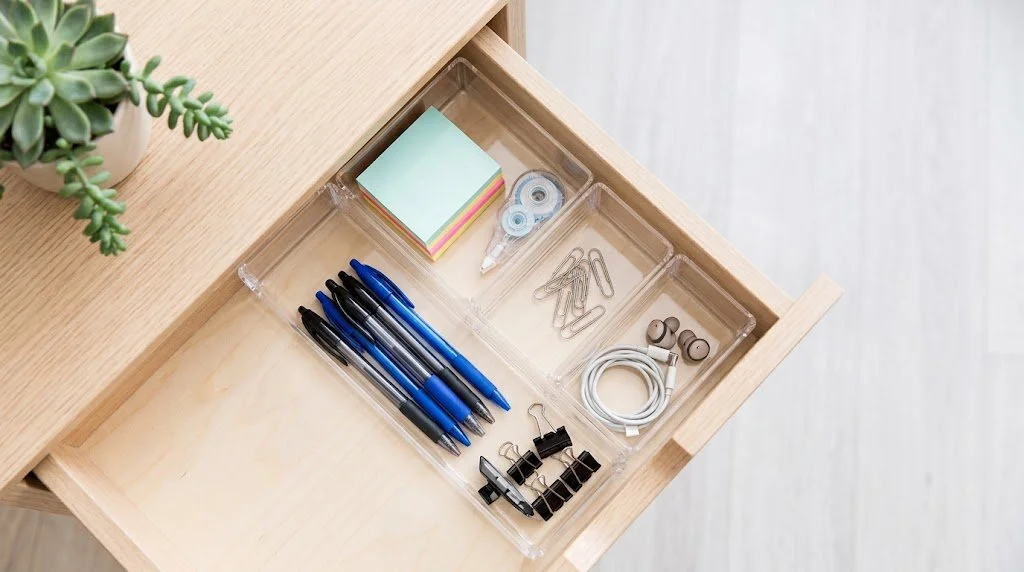
Desk drawers can become a strange little holding zone for everything that does not have a home. Pens, receipts, chargers, sticky notes, old batteries, and a lonely paper clip collection can pile up fast. Learning how to organize desk drawers starts with making room for the tools you use, then letting the rest go.
How To Organize Desk Drawers
The first step in how to organize desk drawers is to empty one drawer at a time. Do not dump your entire desk onto the floor, because that is a fast way to create a bigger mess and lose momentum. Pull out one drawer, place the contents on a clear surface, and take a good look at what has been living there.
You may find things that belong in other rooms. A screwdriver belongs with household tools, and receipts may belong in a paper system. Old cables need a home that makes sense, especially if you do not use them every week. This is where the drawer starts telling the truth about what it has been asked to hold.
Throw away dried pens, outdated notes, broken clips, and random scraps of paper. Most desk drawers have more duplicates than people realize. You probably do not need twelve black pens, four mini staplers, and every promotional highlighter you have received since 2014.
Start With What You Use
When people ask how to organize desk drawers, we suggest starting with the items that earn their place every day. Pens, a notepad, charging cords, stamps, scissors, and office supplies can stay close if you use them often. Items used once a month can go into a lower drawer, nearby cabinet, or labeled storage bin.
This keeps the top drawer from becoming a tiny junk room. A top drawer should support your workday, not make you dig through old takeout menus before finding a pen. If you work from home, this matters even more because your desk may also be handling household paperwork, school forms, and personal tasks.
Try to keep each drawer focused on one job. The top drawer can hold daily tools. A second drawer can handle paper supplies and files. A deeper drawer may be better for tech accessories or larger office items. Once every drawer has a purpose, putting things away gets easier.
How To Organize Desk Drawers By Category
Grouping items by category makes the system easier to follow. Put writing tools together, keep mailing supplies in one area, and gather technology pieces in another. You are not trying to create a tiny office supply store. You are creating a drawer that works when you are busy, tired, or rushing into a meeting.
Drawer dividers can help, but they are not magic. Before buying anything, measure the drawer and see what you truly need to keep. A few small containers from around your home can work well for paper clips, thumbtacks, sticky notes, and charging blocks. Shallow trays also make it easier to see what you have.
If you use a lot of cords, wrap them loosely and label each one. There is nothing fun about finding a mystery cable six months later and having no clue what it charges. A small label can save you from buying a replacement you did not need.
Give Papers A Better Home
Papers are often the reason desk drawers become frustrating. Mail gets tucked into a drawer “for later,” then later turns into a mystery pile. The drawer becomes too full to open smoothly, and important documents get buried with old coupons and school flyers.
Create a simple paper routine instead. Keep active papers in a visible folder, tray, or desktop file holder. Store records that need to be saved in a labeled filing system. Recycle anything that does not require action, and shred documents with private information. Your desk drawers should not carry the weight of every piece of paper that comes into the house.
If paperwork is the biggest challenge in your home office, we can help create a system that fits the way you think and work. An Organized Life creates practical organizing systems for homes and offices, with support available in person or virtually.
Keep It Easy To Maintain
The best answer to how to organize desk drawers is not a complicated setup with twenty containers. It is a system you can reset in five minutes at the end of a week. Keep the tools you reach for near the front, leave a little empty space, and notice when the drawer starts collecting items that belong elsewhere.
A quick reset can make a big difference. Once a week, pull out stray papers, return household items to their proper spots, and check for pens that no longer work. That small habit keeps the drawer from quietly becoming another clutter problem.
You can also keep a small “relocate” tray on your desk. If something lands there that belongs in another room, add it to the tray instead of stuffing it into a drawer. Then make one trip around the house when you are done working. It is simple, and it keeps the desk from absorbing everything.
A Desk That Supports Your Day
Your desk is part of your daily routine, so it should feel useful and calm. When drawers are stuffed, it becomes harder to focus because every small task comes with an extra search. A drawer that holds what you need can make work feel less scattered, even on a busy day.
This is especially important for people who work from home, manage a family schedule, or handle paperwork in the same space where they answer emails. You need office systems that support real life, not systems that only work when everything is quiet. MJ Rosenthal has spent years helping clients create customized solutions that simplify their spaces, belongings, and time.
If you need a visual nudge or want to see how organizing projects come together, you can follow An Organized Life on Instagram. Sometimes seeing an organized drawer is enough to make you grab a trash bag and get started.
FAQs
How often should I organize my desk drawers?
A quick reset once a week can keep things under control. A deeper review every few months is usually enough for most desks.
Do I need drawer organizers for every drawer?
No. Start by removing what does not belong there. Add dividers or trays only when they solve a real problem.
What should go in the top desk drawer?
Keep daily items close by, such as pens, sticky notes, a notebook, scissors, and charging supplies. Avoid storing bulky items that make the drawer hard to use.
How do I deal with extra office supplies?
Keep one backup area for extras, then refill the desk drawer as needed. This stops the top drawer from becoming crowded.
What should I do with old cords and chargers?
Test them, label the ones you keep, and recycle the ones that no longer work. Avoid keeping mystery cables without a known purpose.
Can a professional organizer help with a home office?
Yes. We help clients create desk, paper, and workflow systems that support their daily routines. You can schedule a consultation when you are ready for support.
Give Your Desk A Fresh Start
If you want help learning how to organize desk drawers and the rest of your workspace, contact An Organized Life. We can help you build a system that makes work feel easier every day.