
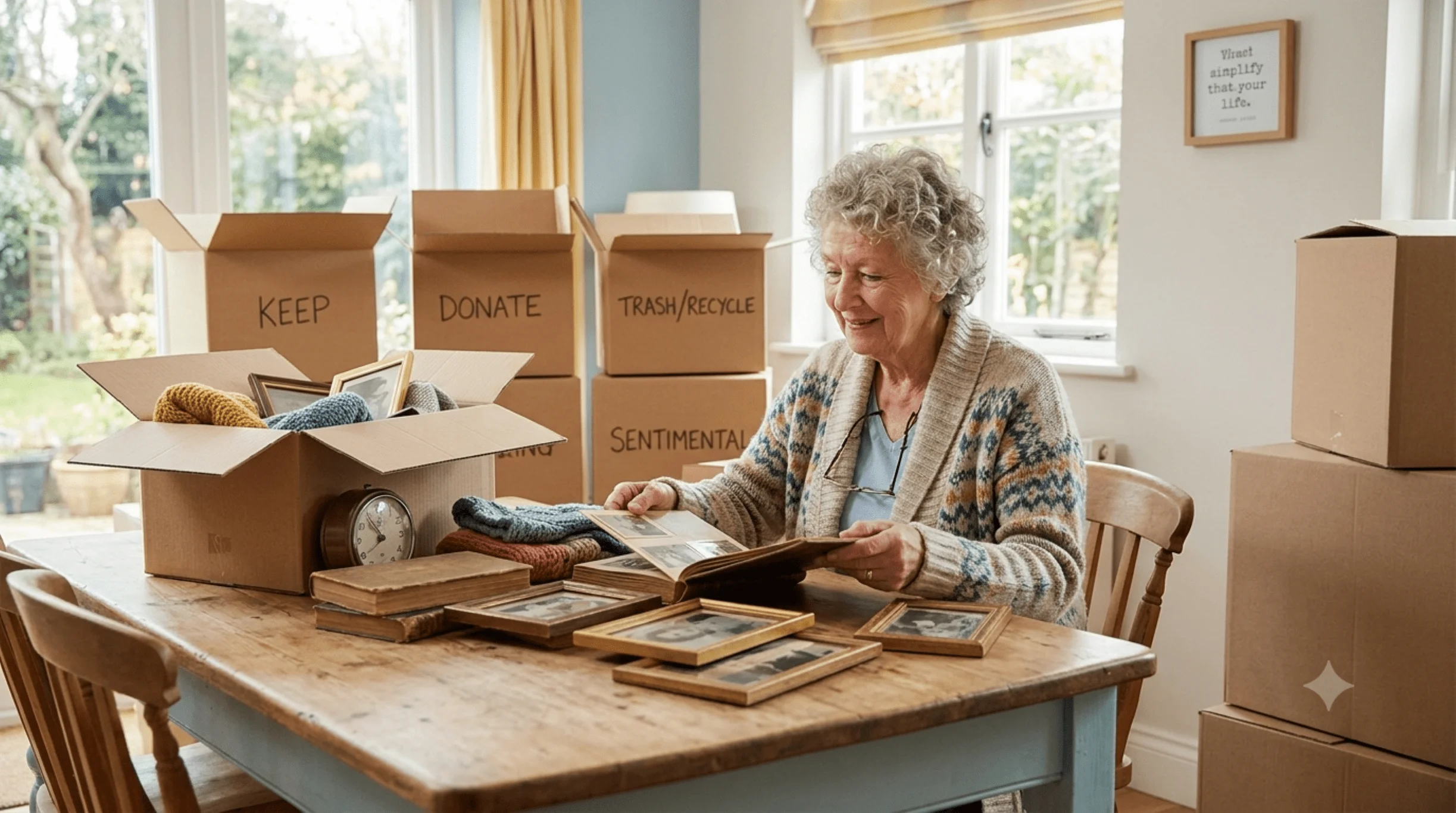
Growing older often means living in a home filled with memories. Every shelf, drawer, and box carries a story, and senior home decluttering is not about erasing those stories, it is about making space to enjoy them without getting buried in stuff. When you look at 50 years of belongings, the whole project can feel impossible at first glance. With a clear framework, a bit of humor, and a room‑by‑room roadmap, it starts to feel like something you can move through.
We have walked beside many families while they sort out long‑lived homes, and we know this is as emotional as it is practical. The goal is a home that is safer, easier to move around in, and simpler to maintain, while still feeling like yours. Senior home decluttering done with care keeps the best parts of your history and lets the extra weight fall away.
Before you start, it helps to decide if you want a guide or a partner. If you are curious who would be supporting you, you can always read more about us on the An Organized Life website or explore our story on the About MJ Rosenthal page.
Why Senior Home Decluttering Feels So Hard
When someone has lived in a home for decades, every decision carries more weight. Senior home decluttering is not the same as cleaning out a spare closet in a starter apartment. You are dealing with layers of life, gifts from people you love, things you paid good money for, and objects that marked milestones.
There is also the fatigue factor. You might know the house needs to be edited, maybe for safety, maybe for an upcoming move, maybe simply to make it easier on your kids someday, but your energy is not what it was when you first moved in. Large projects feel tougher to start, and recovery time from effort is longer. Add in the mental load of decision making and it is easy to see why senior home decluttering gets postponed again and again.
Naming all of that does not make it easier, but it does remind you that you are not “bad at this.” The size of the task and the emotional stakes are real. That is why having a framework helps so much. Instead of looking at the whole house and freezing, you can move step by step and category by category.
Step One In Senior Home Decluttering: Start With Safety
Before you think about photo albums or heirlooms, look at safety. Senior home decluttering should first reduce trip hazards and make key areas easier to use. Think about the paths you walk every day: bed to bathroom, chair to kitchen, front door to the car or mailbox.
Walk those routes and notice anything on the floor that could send someone flying. Extra stools, baskets, piles of shoes, loose rugs, cords, and little tables all count. The goal is not to make the house empty, it is to give feet and walkers a clear line through the space.
Next, look at lighting. You can keep lamps and cozy corners, but you should not have dark hallways or stair landings. Senior home decluttering often includes clearing surfaces near switches, removing stacked items from stair edges, and making sure nightlights or lamps are easy to turn on.
This first round gives you a quick win. You will feel the difference right away when you move around the house. It also builds confidence for the tougher categories.
A Room‑By‑Room Senior Home Decluttering Plan
Once safety is handled, it is time to tackle rooms in an order that gives you momentum. For senior home decluttering, we like to start with spaces that affect daily life most.
Begin in the kitchen. This is where clutter directly impacts meals and energy. Take one cabinet or drawer at a time. Pull out any duplicate gadgets, chipped mugs you never use, old plastic containers with missing lids, and expired food. Think about what you cook now. If certain tools or serving dishes have not been used in years and do not carry strong sentimental meaning, they can move into the donation or pass‑along pile.
After the kitchen, move to the bedroom. Senior home decluttering in this room focuses on clothes, linens, and surfaces. Aim to have only the clothes you wear now, not every size you have ever been. Keep enough to feel comfortable, but not so much that dressers are packed and closets are hard to use. In the nightstand, pare down to what you reach for regularly: glasses, medication, a book, not a stack of old receipts and broken pens.
Then address bathrooms. Outdated medication should be disposed of properly through a pharmacy or local program. Old skin care, tiny hotel bottles, and dried up products can go. Senior home decluttering in bathrooms also keeps the space safer by clearing floors, removing unstable storage pieces, and making room for grab bars if you need them.
Common areas come next: living room, den, or family room. Here, the focus is on seating, pathways, and surfaces. Keep enough seating for normal use, but not so many chairs that nobody can move. Limit knickknacks to a few favorites on each surface. This is where senior home decluttering meets display design, since you are curating instead of stripping personality away.
Category‑By‑Category Senior Home Decluttering
Some categories stretch across many rooms. Trying to handle them room by room can make you feel like you are chasing your tail. Senior home decluttering works better when you pick one category and gather it together.
Paper is a big one. Mail, statements, medical records, invitations, programs, and old notes often live all over the house. Set up a table or desk as a sorting station. Make three basic groups: papers to act on, papers to keep long term, and papers to shred or recycle. Senior home decluttering for paper often includes creating a simple, labeled file system for important records and a small, visible spot for current items so they do not vanish into piles.
Another category is sentimental items. This is where senior home decluttering really hits the heart. You can approach this in layers. Start with low‑emotion items like generic trinkets or souvenirs that even you do not remember. Then, when you feel ready, move to photographs, letters, and heirlooms. You do not have to keep every single physical item to honor the memory. A few well‑chosen pieces can represent a whole era.
Clothing and linens fall into category work too. Gathering all winter coats from various closets into one spot helps you see how many you truly have. Senior home decluttering in this category might look like keeping the coats that fit and feel good now and passing the rest along to someone who needs them.
Bringing Family Into Senior Home Decluttering
Decluttering a long‑lived home touches more than one person. Adult children, grandchildren, and extended family often have feelings about the process. Sometimes they want to keep everything. Sometimes they push to let things go faster than feels comfortable. Senior home decluttering works best when the people involved talk honestly about their goals and limits.
If you are the one whose home is being edited, try naming what matters most to you. You might say, “I want this to feel like my house until I am done living here,” or, “I do not want you stuck with all this later.” That gives everyone a sense of your priorities. Family members can share their hopes too, maybe wanting a few specific keepsakes or hoping to reduce the future burden of a big house cleanout.
Having a neutral guide in the mix can help. Someone who knows senior home decluttering and has no emotional attachment to the stuff can keep the project moving and translate between different perspectives. If you want a sense of how we support families through this kind of work, you can browse our projects and updates on anorganizedlifebostonorganizer.
When Senior Home Decluttering Connects With Future Plans
Not every project is tied to a move, but many are. Senior home decluttering often shows up when someone is preparing to downsize, move in with family, or transition to a different type of housing. In those moments, every decision feels tied to the question of what life will look like in the new place.
A practical approach is to think in terms of “must haves,” “nice to haves,” and “ready to release.” For example, if you are moving from a three bedroom home to a one bedroom apartment, senior home decluttering might mean picking one bedroom set to keep, one or two favorite seating pieces, and a smaller set of dishes and cookware. The rest can be gifted, donated, or sold.
It can also help to sketch a basic floor plan of the new home or work with someone who can do that with you. Senior home decluttering becomes more concrete when you can see where that favorite chair will go or how many bookcases will truly fit. For families who like a more structured process, you can even schedule a session to map out the project together.
FAQs
How long does senior home decluttering usually take?
Timeline depends on the size of the home, the volume of belongings, and how many people are involved in decisions. Some projects focus on a few key rooms over several weeks, while whole‑home decluttering can stretch over months so the pace feels humane.
What if my parent does not want to get rid of anything?
Resistance is common, especially when items feel tied to identity and history. It often helps to start with safety and comfort rather than talking about “getting rid of stuff,” focusing on walkways, bathrooms, and bedrooms before tackling sentimental items.
How do we handle sentimental belongings without hurting feelings?
Give sentimental items their own time and space instead of mixing them with low‑emotion categories. Invite stories, take photos, and identify a smaller number of items that feel most important, emphasizing that you are trying to honor the memories, not erase them.
Should we bring in a professional organizer for senior home decluttering?
Many families find that an outside guide helps keep the process calm and structured. A professional can break the project into steps, mediate between family members, and offer practical ideas that are hard to see from inside the situation.
What if my siblings and I disagree about what to keep?
Disagreements happen, especially with items that carry strong memories. It can help to agree on some ground rules, such as each person picking a certain number of keepsakes, or taking turns having “first choice” in different categories, so decisions feel fair.
Can senior home decluttering be done if I still live in the home?
Yes. Many projects happen while the senior continues living in the house. The work is done in stages, with care taken to keep daily life running, so the home feels more comfortable and safer as the process unfolds rather than turning everything upside down at once.
A Gentle Next Step Toward Less Clutter
Let’s Tackle This Together, Not Alone
If senior home decluttering feels like a mountain you cannot climb by yourself, we would be honored to walk it with you. Reach out through our contact page at An Organized Life or explore more about how we work on the About MJ Rosenthal page, and if you want a closer look at our day‑to‑day projects, you can follow us on Instagram.