
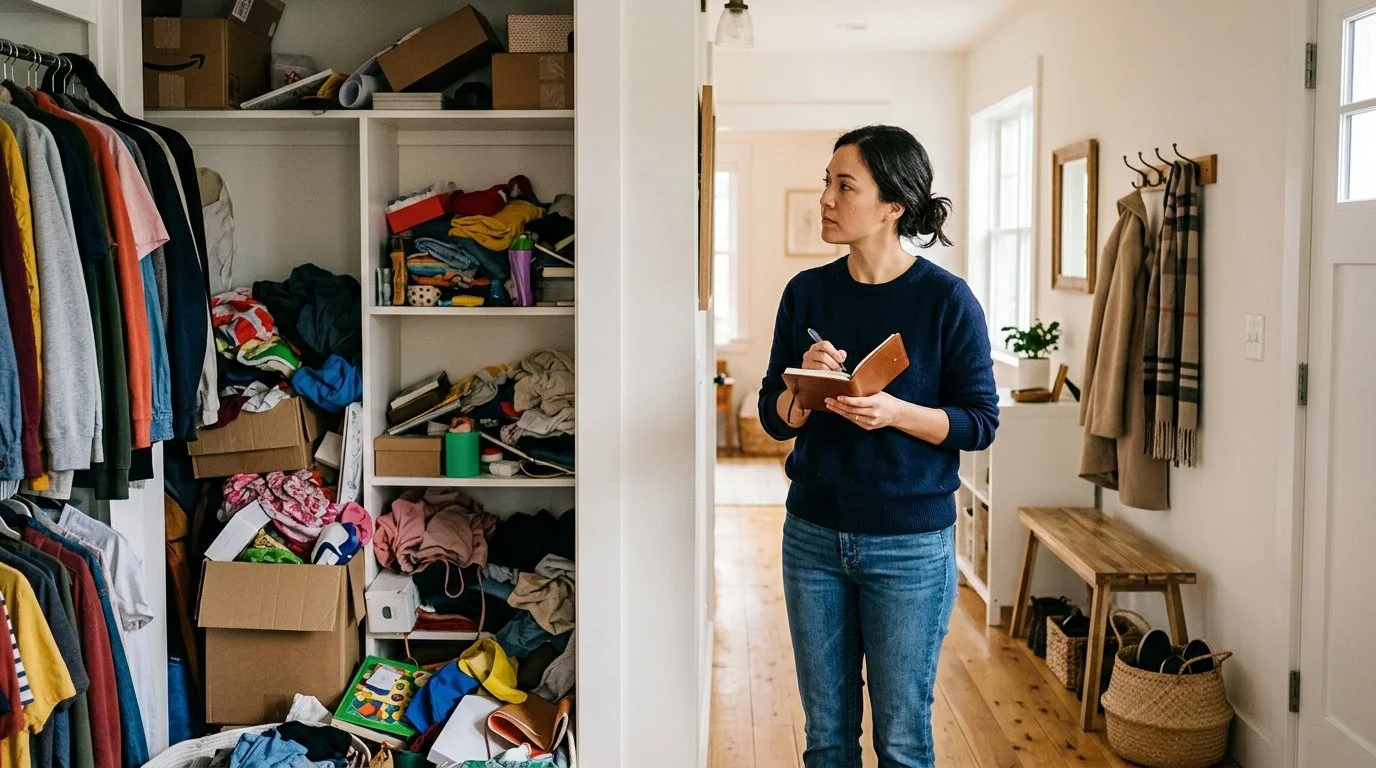
When your home feels overloaded, it is hard to know where to begin. Every room seems to want your attention at once, and that can stop you cold. The good news is that spaces need organizing in an order that makes sense, not in a perfect order.
Spaces Need Organizing
The first place to start is usually the space that affects your daily rhythm the most. If your mornings get derailed by a messy entryway, that space needs organizing before the guest room does. If dinner feels like a scavenger hunt, the kitchen should move to the top of the list.
We often tell clients to look for the room that creates the most friction. Maybe it is the closet that spits clothes onto the floor, or the desk buried under unopened mail. When spaces need organizing, the right starting point is often the one that steals the most time, energy, or patience. A quick win there can calm the whole house.
It also helps to think in terms of use, not emotion. A room can feel more annoying than urgent, and the loudest room is not always the one that needs attention first. The places you touch every day usually deserve priority, because they shape how the whole day unfolds.
How To Spot The First Room
A good rule is to notice what you avoid. If you keep shutting a door because the room feels too heavy, that space needs organizing more than the room you can tidy in ten minutes. We also pay attention to repeat problems, like lost keys, late mornings, or piles that keep migrating from one table to another.
Another clue is what slows down your routines. If getting out the door takes ten extra minutes because coats, shoes, and bags are scattered, that area is telling you something. If bills keep disappearing under a stack of paper, the paper zone is waving its hand. The first room should solve a real pain point, not just look nice when you walk past it.
A simple way to think about it is this. Start with the room that blocks daily routines. Move to the space that creates the most visual stress. Then tackle the area tied to an upcoming event or deadline. That order keeps the work from spiraling. It also gives you proof that progress is happening, which matters when the whole house feels like one long to-do list.
Sometimes the best first space is small. A junk drawer can become a surprisingly powerful win if it sits in the kitchen and gets used all the time. A tiny entry table may have more impact than a huge storage room if it controls the flow of your mornings. Small spaces need organizing too, especially when they act like traffic cops for the rest of the home.
Spaces Need Organizing In Real Life
A lot of people start with the easiest room because it feels safer. I get it. A basement packed with mystery bins can wait, but your kitchen counters cannot. When spaces need organizing, it helps to ask what would make tomorrow easier, not what looks most dramatic for a before-and-after photo.
Think about the spaces you use on autopilot. Entryways, kitchens, bathrooms, and bedrooms usually matter first because they shape how your day starts and ends. If those areas are messy, the whole day can feel off before breakfast is even done. That is why we often suggest starting where your routines live.
The lived-in spaces also reveal the real story of the house. They show where clutter lands, where people drop things, and where systems broke down long before the room filled up. Once you see those patterns, organizing gets less random and more useful. You are not just clearing surfaces, you are fixing the places where life keeps tripping.
That is also where support can make a difference. If you are tired, overwhelmed, or embarrassed, it is easy to keep circling the same rooms without real traction. A thoughtful plan can turn that swirl into action. We help clients look at what spaces need organizing now, then sort the rest into a later list that does not keep nagging at them. If you want a quick starting point, you can schedule a consultation and talk it through with us.
What To Leave For Later
Not every room deserves your first burst of energy. Seasonal decor boxes, long-term storage, and rooms that get occasional use can wait until the urgent spaces are handled. If a space is not messing with your daily flow, it probably does not need to jump to the front of the line.
That said, some later spaces become urgent fast when they are tied to a move, a new baby, or a work change. In those cases, the space that looks secondary can become the one with the biggest payoff. We help clients make those calls without turning it into a giant emotional knot. The goal is a home that works better, not a marathon of guilt.
It can help to make a short list after the first room is done. Put the next two spaces on paper, then stop. Too many people try to solve the whole house in one sitting, and that usually makes the work feel heavier than it needs to. Once one area is under control, the next decision becomes easier.
Sometimes it also helps to get a little inspiration before you start. You can browse our home page to see how we approach organizing, or take a look at MJ Rosenthal’s about page to learn more about the person behind An Organized Life. If you like seeing real-life work in progress, the team also shares updates on Instagram.
FAQs
How do I know if a space is truly urgent?
If it causes repeated stress, delays, or clutter spillover into other rooms, it is urgent. A space that keeps interrupting your day usually needs attention first.
Should I start with the hardest room?
Not always. Start with the room that will help your life move more smoothly right away. Sometimes that is the hardest room, but not always.
What if every room feels equally bad?
Pick the room that affects your morning or evening routine most. That choice usually gives you the fastest relief and the most momentum.
Do I need to finish one space before starting another?
No, but it helps to keep your focus narrow. Two active spaces can be enough, especially if one is a daily-use area and the other is tied to a deadline.
How long should I work before taking a break?
Short, focused sessions work best. A solid one to two hours in the right room often beats a full day of scattered effort.
Can professional help make this easier?
Yes. MJ Rosenthal and An Organized Life help clients sort priorities, build systems, and stay calm when the whole house feels behind. You can also reach out here when you are ready to get started.
Ready For A Reset?
If you are staring at too many rooms and not enough energy, reach out to An Organized Life. We can help you figure out which space needs organizing first and make the next step feel doable.