
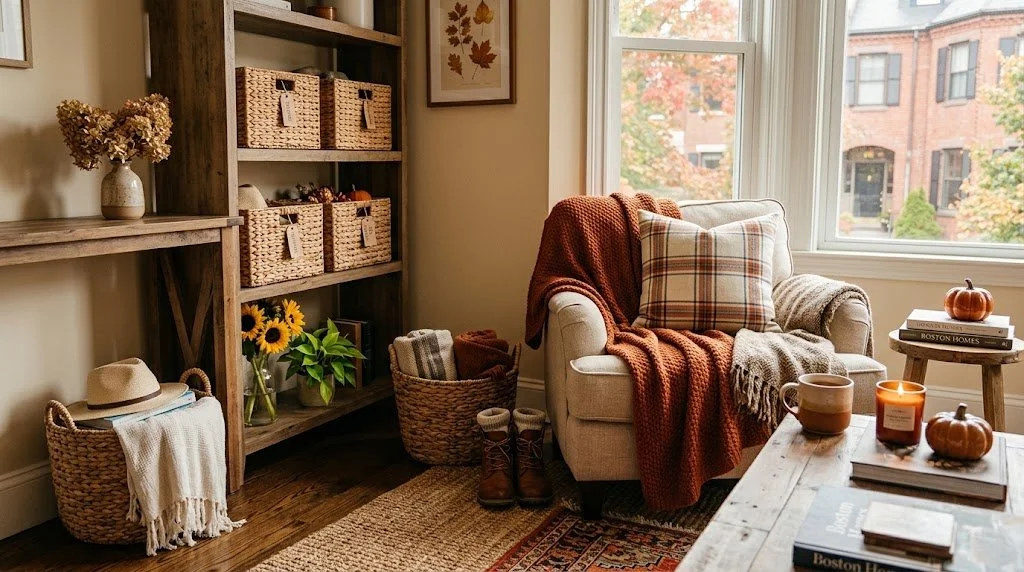
The first cold morning usually makes it clear that summer is over. Suddenly there are jackets on chairs, boots by the door, school papers on the counter, and sports gear turning up in every room.
A fall reset does not need to take over your weekend. A few changes in the places you use most can make the house feel ready for the season
Start With The Entryway
The fastest way to make a home feel calm is to reduce the number of little decisions your brain has to make. That means giving everyday items a home, keeping surfaces from collecting random clutter, and making the most-used spaces easier to reset. When the entryway works, the morning feels lighter. When the kitchen works, the whole day gets a better start.
We see this all the time in client homes. A calm feeling often shows up after a few simple changes, not after a giant overhaul. A basket by the door, a labeled shelf, or a paper system that keeps mail off the counter can shift the mood of a room more than people expect. The point is not to create a magazine spread. The point is to make a home feel calm in a way that actually lasts.
The entryway takes the hit first. Summer sandals are still near the door when backpacks, raincoats, and heavier shoes start showing up. That is how a small space gets messy fast.
Take a look at what is sitting there now. Put away the things your household is no longer using every day. Move summer gear to a closet, storage bin, or another spot that makes sense.
Make room for the items that will be used during the next few months. Give coats a hook, give boots a place to dry, and make sure bags have somewhere to land. If you have children, keep their daily items low enough for them to reach.
You do not need a big mudroom for this to work. A small basket, a bench, or a few wall hooks can help if they are used in a way that fits your household
Rotate Clothes As The Weather Changes
You do not have to swap your whole closet overnight. Start with the things you know you will not wear again for a while. Shorts, swimsuits, flip-flops, and lightweight summer pieces can move out of the main closet.
Bring fall clothing forward as you need it. Put sweaters, jeans, and jackets where they are easy to reach. Leave a few in-between items available for those warm September afternoons that show up when you least expect them.
Before storing summer clothing, take a quick look at what is still in good shape. If something no longer fits, needs repair, or has not been worn in years, set it aside. There is no reason to pack clothing you already know you will not use next summer.
Use bins, bags, or under-bed storage for off-season clothing. Add a simple label so you know what is inside. You do not need a complicated system. You need to be able to find a rain jacket without pulling apart the closet.
Create A Home For School Gear
School papers can take over a kitchen counter in about two days. Lunch boxes, backpacks, sports uniforms, and homework folders add up fast when there is no regular place for them.
Choose one drop spot for bags when everyone gets home. It can be a hook, a bench, or a basket near the door. The best location is the one your family will use without being reminded ten times.
Create a paper spot too. A small tray, wall file, or folder can hold forms that need attention. Check it at the same time each day so permission slips do not disappear under unopened mail.
Sports gear needs its own place. A bin in the garage, a basket near the door, or a shelf in a closet can work. Keep wet gear separate when possible so the rest of the house does not end up smelling like a locker room.
Refresh The Bedrooms
Fall is a good time to look at bedding, pajamas, and bedroom storage. Pull out warmer blankets if you use them. Wash and put away beach towels that are still hanging around. Make room for the clothes people wear when the mornings get colder.
This is also a good time to clean out the top of dressers and nightstands. Summer has a way of leaving behind sunscreen, sunglasses, books, and random items that never made it back to their proper spots.
You do not have to redecorate the bedroom for fall. A clean floor, fresh sheets, and a blanket within reach can make the space feel ready for the change in weather.
If you have children, check their closets and drawers before cold weather gets serious. Kids grow fast, and fall is often when people realize last year’s jacket no longer fits. Doing this early can save a rushed shopping trip later.
Make Space In The Kitchen
Fall changes the way many families use the kitchen. More meals are cooked at home, slow cookers come back out, and holiday baking supplies start to appear. The kitchen can get crowded if there is no room for those things.
Look through the pantry and cabinets before stocking up. Get rid of expired food and take a look at the containers that have lost their lids. Clear out a shelf for fall snacks, lunch supplies, or baking ingredients.
Pull out the cookware you use more during cooler weather. Store summer serving pieces farther back if they are not needed. This makes the kitchen easier to use without adding more stuff to the counters.
Keep the counters as open as possible. When school papers, mail, and small appliances pile up, cooking feels harder than it needs to. A quick reset at the end of the day can keep the kitchen from becoming the household catchall.
Check Seasonal Storage
Before buying new storage containers, look at the ones you already have. Many homes have plenty of bins, but they are full of items nobody has touched in years.
Use the change of season as a reason to edit. If a summer item is worn out or unused, do not save it for another year. The same goes for extra school supplies, old activity gear, and things that have been sitting in storage without a purpose.
Store seasonal items in a spot that is easy to reach. Heavy bins should stay low. Keep labels simple so you can see what belongs where. A label such as “Summer Clothes” or “Beach Gear” is enough.
If seasonal storage is packed, confusing, or hard to reach, An Organized Life can help. We work with clients to build simple systems that make seasonal changes feel easier instead of stressful.
FAQs
When should I start transitioning my home for fall?
Start when your routine begins to change. For many families, that happens around back-to-school season or when the weather begins to cool.
Do I need to put all summer clothes away at once?
No. Keep a few warmer-weather items available during early fall. Store the clothes you know you will not need for several months.
How do I keep backpacks from ending up everywhere?
Give each person a regular drop spot near the entryway. Hooks, baskets, or a bench can work if the setup is easy to use.
What should I do with summer gear I no longer use?
Donate items that are still useful. Throw away damaged items that cannot be repaired. Avoid storing gear you do not expect to use again.
How can I keep fall storage from getting crowded?
Review what you already have before bringing in seasonal items. Keep only what you use, and store it in a place that is easy to access.
Can a professional organizer help with seasonal transitions?
Yes. You can learn more about MJ Rosenthal and how we help clients organize homes around changing seasons and routines.
Settle Into Fall With Less Stress
If your home needs help getting ready for cooler weather, contact An Organized Life for hands-on seasonal organizing support. We can help you make room for what fall brings without adding more clutter.